
Utah Truck Accident Lawyer
Start with a free Case meeting
Get Strategic Legal HelpWinning Solutions When It Matters Most
Utah Truck Accident Lawyer
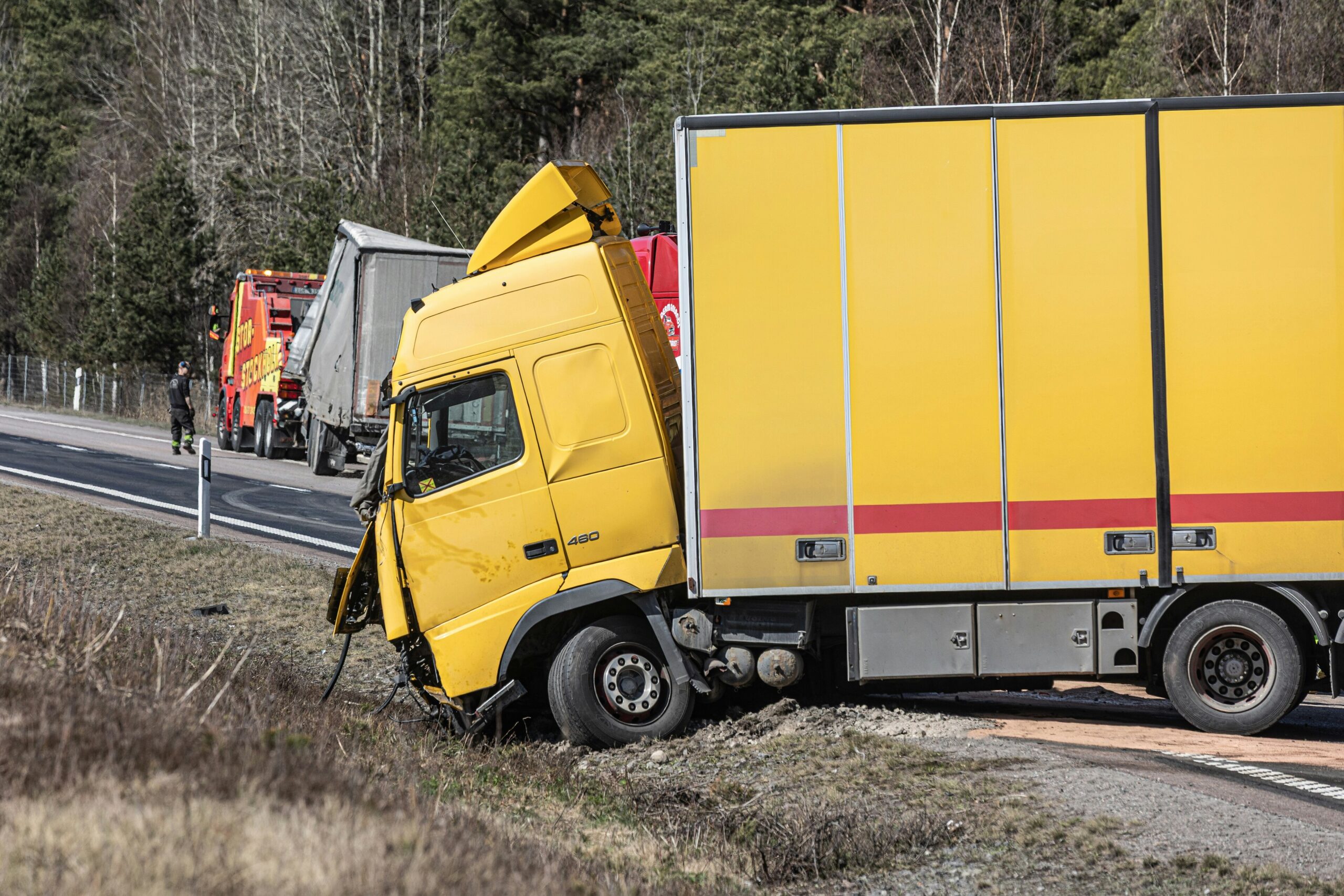
A truck accident can change your life in seconds. A collision involving a commercial truck, delivery vehicle, tractor-trailer, or other large truck can leave victims facing serious injuries, mounting medical bills, lost income, and uncertainty about their future. When a truck driver’s negligence or a trucking company’s failure to follow safety requirements contributes to a crash, injured people may have legal options for pursuing compensation.
At Fontenot Law, P.C., we help Utah residents understand their rights after serious accidents and explore their options under Utah personal injury law. Truck accident claims can involve multiple parties, complex insurance policies, federal trucking regulations, and evidence that must be preserved quickly.
If you or someone you love has been injured in a truck accident in Utah, understanding what caused the collision and who may be legally responsible is an important first step. Our goal is to help you understand the claims process, the compensation that may be available, and the steps you can take to protect your interests.
Call Fontenot Law, P.C. at (801) 312-9330 to discuss your truck accident case.
Why Hire a Utah Truck Accident Lawyer?
Truck accident cases often require a different approach from ordinary car accident claims. Commercial vehicles are larger and heavier than passenger cars, and their operation may be subject to additional safety requirements. A collision can involve a truck driver, trucking company, vehicle owner, maintenance provider, cargo-loading contractor, or another party whose conduct contributed to the crash.
A Utah truck accident lawyer can evaluate the circumstances of a collision, identify potential sources of liability, and help determine what evidence may be necessary to support a claim. This may include police reports, photographs, witness statements, vehicle inspection records, electronic logging device information, driver qualification records, and available vehicle data.
Legal representation can also help injured people navigate insurance negotiations while they focus on medical treatment and recovery. Trucking and commercial insurance claims may involve adjusters who investigate liability, evaluate damages, and challenge aspects of a claim.
At Fontenot Law, P.C., we understand that every accident presents different facts. The appropriate strategy depends on the injuries, available evidence, insurance coverage, and applicable law.
Learn more about our firm through our about Fontenot Law page, and explore our broader Utah personal injury lawyer services to understand how personal injury claims may be handled.
Call (801) 312-9330 to discuss your personal injury case with a premier personal injury lawyer at Fontenot Law, P.C. today!
Common Causes of Truck Accidents in Utah
Truck accidents may result from driver error, mechanical problems, unsafe operating practices, hazardous road conditions, or a combination of factors. Identifying the cause is important because liability depends on the facts and the legal duties applicable to each party.
Driver fatigue and hours-of-service violations
Long driving hours, insufficient rest, and demanding delivery schedules can contribute to fatigue. A fatigued driver may have slower reaction times, reduced awareness, and difficulty maintaining a safe following distance.
Federal hours-of-service regulations apply to many commercial motor vehicle operations. Driver logs and electronic logging device records may help investigators evaluate compliance, although a violation does not automatically establish liability in every case.
Distracted driving
Using a phone, interacting with navigation equipment, adjusting controls, or paying insufficient attention to traffic can prevent a truck driver from recognizing a developing hazard. Evidence of distraction may be relevant when determining whether the driver exercised reasonable care.
Speeding and unsafe driving
Excessive speed can make a heavy truck more difficult to stop or control. Driving too fast for traffic, weather, visibility, or road conditions can increase the risk of rear-end collisions, rollovers, and other serious crashes.
Improper cargo loading
Unbalanced, unsecured, or overloaded cargo can affect a truck’s stability and handling. Shifting freight may cause a driver to lose control, while improperly secured cargo can fall onto the roadway and create additional hazards.
Depending on the facts, responsibility may extend beyond the driver to a company or contractor involved in loading or securing the shipment.
Poor maintenance and mechanical defects
Brake failures, tire problems, defective lighting, steering issues, and other mechanical problems may contribute to a collision. Maintenance records, inspection reports, repair invoices, and expert examinations can help determine whether a vehicle defect or maintenance failure played a role.
Unsafe lane changes and blind spots
Large trucks have substantial blind spots and require more space to maneuver than many passenger vehicles. A driver who changes lanes without checking surrounding traffic, turns without sufficient clearance, or fails to account for nearby vehicles may cause a serious collision.
Hazardous weather and road conditions
Utah drivers may encounter snow, ice, strong winds, reduced visibility, and changing mountain-road conditions. Commercial drivers must account for these hazards and operate their vehicles safely under the circumstances.
The Federal Motor Carrier Safety Administration (FMCSA) publishes national truck crash information and safety resources. Its Large Truck and Bus Crash Facts reports compile information from federal crash databases and other transportation sources.
Call (801) 312-9330 to discuss your personal injury case with a premier personal injury lawyer at Fontenot Law, P.C. today!
Utah Truck Accident Statistics and Road Safety
Traffic crash statistics illustrate why truck safety matters to Utah motorists. According to preliminary figures released by the Utah Department of Transportation and Utah Department of Public Safety in January 2025, 281 people died on Utah roads in 2024, compared with 279 in 2023. The agencies also reported that approximately one-third of 2024 traffic fatalities involved vulnerable road users, including motorcyclists, pedestrians, and bicyclists.
These are statewide traffic fatality figures, not truck-specific statistics. They provide important context about roadway safety but should not be interpreted as the number of deaths caused by commercial trucks.
The federal government separately tracks crashes involving large trucks and buses. FMCSA uses data from the National Highway Traffic Safety Administration, the Motor Carrier Management Information System, and other transportation sources to analyze fatal, injury, and property-damage-only crashes.
Truck accident statistics can help identify broader safety trends, but they do not determine fault in an individual collision. Each case requires examination of the actual circumstances, including the vehicles involved, road conditions, driver conduct, and available evidence.
For Utah-specific information, motorists can consult the Utah Department of Transportation and the Utah Highway Safety Office. Their public resources provide information about traffic safety, crash trends, and prevention efforts.
Call (801) 312-9330 to discuss your personal injury case with a premier personal injury lawyer at Fontenot Law, P.C. today!
Who Can Be Held Liable for a Utah Truck Accident?
Determining liability is one of the most important parts of a truck accident claim. The person driving the truck may be responsible, but other parties may also have contributed to the collision. Liability depends on the available evidence, the legal relationship between the parties, and the applicable rules of Utah law.
The truck driver
A truck driver may be liable when negligent conduct, such as speeding, following too closely, distracted driving, or failing to yield, causes an accident and resulting injuries.
The trucking company
A trucking company may face liability when its own negligent conduct contributes to a crash. Examples may include inadequate training, negligent hiring or supervision, unsafe scheduling practices, or failures involving vehicle maintenance.
An employer may also be legally responsible for an employee’s conduct when the applicable requirements for vicarious liability are satisfied. Whether a driver is an employee or an independent contractor, and the company’s actual role in the operation, can affect the analysis.
The truck owner or maintenance provider
The owner of a commercial vehicle or a maintenance provider may be responsible if negligent inspections, inadequate repairs, or other failures contributed to a mechanical problem that caused the collision.
Cargo loaders and freight companies
Cargo-related claims may involve businesses responsible for loading, securing, or distributing freight. Evidence must establish that the party had an applicable duty and that its conduct contributed to the accident and resulting harm.
Manufacturers and other parties
If a defective tire, brake component, steering system, or other vehicle part contributed to the crash, a product liability claim may warrant investigation. Roadway conditions or another motorist’s conduct may also be relevant in appropriate cases.
Identifying every potentially responsible party can matter because different defendants may have different insurance policies and financial resources. However, a party is not liable merely because it was connected to the truck or shipment. Evidence must support the applicable legal basis for the claim.
Call (801) 312-9330 to discuss your personal injury case with a premier personal injury lawyer at Fontenot Law, P.C. today!
Utah Truck Accident Laws and Comparative Negligence
Utah law governs many truck accident claims arising within the state, although federal regulations may also apply to commercial trucking operations. Understanding how these legal rules interact can help injured people evaluate their options.
Utah’s comparative negligence rule
Utah follows a modified comparative negligence system under Utah Code § 78B-5-818. Under this statute, an injured person may recover damages when the applicable fault requirements are satisfied, even if that person shares some responsibility for the accident.
In general, an injured person’s fault must be less than the combined fault of the defendant or defendants and other persons whose fault is legally included in the statutory calculation. If the injured person’s fault equals or exceeds that combined fault, recovery is barred under the statute. When recovery is permitted, the amount may be reduced to account for the injured person’s share of fault.
For example, if a claim has $100,000 in established damages and the injured person is found 20% at fault, a simplified calculation would reduce the damages by $20,000, leaving $80,000 before other applicable adjustments. The actual result depends on the facts, the parties involved, and Utah’s statutory rules concerning allocation of fault.
Truck insurers may argue that an injured motorist contributed to a collision by speeding, changing lanes unsafely, or following too closely. The evidence must be evaluated carefully rather than accepting an insurer’s fault assessment without question.
Read the current statute directly through the Utah Legislature’s comparative negligence provisions.
Federal trucking safety requirements
Many commercial truck operations are subject to federal motor carrier safety regulations. Depending on the operation, these rules may address driver qualifications, hours of service, vehicle inspections, maintenance, cargo securement, and drug and alcohol testing.
A regulatory violation may be relevant evidence, but it does not automatically establish every element of a civil negligence claim. The connection between the alleged violation, the crash, and the injuries must be evaluated.
Statutes of limitations
Utah has deadlines for filing personal injury lawsuits. The applicable period depends on the legal basis for the claim and the circumstances involved. Many ordinary negligence claims for personal injury are subject to a four-year limitation period under Utah Code § 78B-2-307, but exceptions and different deadlines may apply.
Claims involving government entities, particular statutory causes of action, minors, or other special circumstances may have different requirements. A deadline should never be calculated solely from a general online summary.
The Utah State Courts’ statute of limitations guidance explains why identifying the correct deadline is important. Prompt legal review can help preserve claims and avoid preventable filing problems.
Call (801) 312-9330 to discuss your personal injury case with a premier personal injury lawyer at Fontenot Law, P.C. today!
What Compensation May Be Available After a Truck Accident?
A truck accident claim may seek compensation for losses caused by another party’s legally actionable conduct. The amount available depends on liability, the severity of the injuries, the evidence supporting the losses, applicable insurance coverage, and other legal considerations.
Medical expenses
Compensation may include reasonable and necessary medical expenses related to the accident. Depending on the circumstances, these may involve emergency treatment, hospital stays, surgery, prescription medications, rehabilitation, diagnostic testing, and follow-up care.
When injuries require continuing treatment, the claim may also need to account for reasonably supported future medical costs.
Lost wages and reduced earning capacity
An injured person who cannot work during recovery may experience lost income. If an injury causes long-term limitations that affect the person’s ability to earn a living, a claim may include diminished earning capacity when supported by the evidence.
Employment records, pay statements, medical restrictions, and appropriate expert opinions may help establish these losses.
Pain, suffering, and reduced quality of life
Physical pain, emotional distress, limitations on daily activities, and the impact of a serious injury on quality of life may be relevant to non-economic damages where permitted by law.
These losses are individualized. The effects of an injury, its duration, and its consequences for the person’s life can differ considerably from one case to another.
Property damage
A claim may include vehicle repair costs or the value of a vehicle that is determined to be a total loss. Other damaged personal property may also be considered when supported by evidence and applicable law.
Future care and long-term disability
Severe truck accidents can cause traumatic brain injuries, spinal cord damage, fractures, and other conditions that require extensive treatment. When supported by appropriate medical and financial evidence, future care expenses and long-term losses may form part of a claim.
There is no universal settlement amount for a Utah truck accident. Any estimate should account for the particular injuries, treatment, recovery outlook, liability issues, and available insurance.
Call (801) 312-9330 to discuss your personal injury case with a premier personal injury lawyer at Fontenot Law, P.C. today!
Dealing With Trucking Companies and Insurance Adjusters
Truck accident claims may involve several insurance policies, including commercial liability coverage, policies associated with a truck owner, and coverage applicable to other responsible parties. The available coverage depends on the vehicle, the operation, the policy language, and the facts of the accident.
Federal financial responsibility requirements may apply to certain motor carriers, but the minimum requirement is not necessarily the amount of insurance available in every case. Coverage must be verified rather than assumed.
After a crash, an insurer may request a recorded statement, medical authorization, photographs, or other documentation. It is important to understand what is being requested and how the information may be used before agreeing to provide it.
Consider these practical precautions:
- Provide accurate information and avoid guessing about facts you do not know.
- Keep copies of medical bills, treatment records, receipts, and wage-loss documentation.
- Avoid signing a settlement or broad release before understanding the scope of your injuries and the effect of the agreement.
- Do not assume that an initial offer accounts for future treatment or long-term limitations.
- Preserve relevant correspondence and claim documents.
- Ask questions if an insurer disputes liability, delays a decision, or requests information that appears unrelated to the claim.
Insurance companies may investigate the accident and question the extent of claimed losses. A careful review of the evidence can help clarify the strengths and weaknesses of the claim and whether a proposed resolution adequately addresses the documented damages.
For additional information about our services and how to get in touch, visit the Fontenot Law, P.C. contact page.
Call (801) 312-9330 to discuss your personal injury case with a premier personal injury lawyer at Fontenot Law, P.C. today!
Evidence That Can Strengthen a Truck Accident Claim
Evidence can be critical when the parties disagree about how a truck accident occurred or who should be held responsible. Some commercial vehicle records may be retained for limited periods, so identifying and preserving relevant material early can be important.
Potential evidence includes:
- Police reports: These can document the reported circumstances, involved parties, observations, and initial investigation.
- Photographs and videos: Images of vehicle damage, road conditions, debris, skid marks, and visible injuries may help reconstruct the collision.
- Witness statements: Independent witnesses may provide information about vehicle movements, traffic conditions, or events immediately before impact.
- Electronic vehicle data: Depending on the truck and equipment, electronic control modules or other systems may contain information about speed, braking, or vehicle operation.
- Driver logs: Electronic logging device records and related documentation may help establish driving and rest periods where applicable.
- Inspection and maintenance records: These may identify mechanical issues or recurring maintenance concerns.
- Cargo documents: Shipping records and loading documentation may be relevant if shifting or unsecured cargo contributed to the crash.
- Medical records: Treatment notes, diagnostic results, and medical opinions can help connect the accident to the claimed injuries and establish the course of treatment.
- Employment and financial records: These may support claims involving lost wages or reduced earning capacity.
Not every case requires every category of evidence. The appropriate investigation depends on the type of crash and the issues in dispute. Evidence should be obtained lawfully and preserved without altering original records or interfering with an official investigation.
A timely review can help identify gaps in the available information and determine whether additional records, expert analysis, or witness interviews may be necessary.
Call (801) 312-9330 to discuss your personal injury case with a premier personal injury lawyer at Fontenot Law, P.C. today!
What to Do After a Truck Accident in Utah
The steps taken after a collision can affect your health, documentation, and ability to pursue a claim. Safety and medical care should always come first.
1. Get to safety and call for help
If possible, move away from traffic and call 911 when the collision involves injuries, significant damage, or another emergency. Follow instructions from emergency personnel and avoid putting yourself at risk to collect evidence.
2. Seek medical attention
Some injuries, including concussions and internal injuries, may not be immediately obvious. Get prompt medical evaluation and follow the treatment recommendations provided by qualified healthcare professionals.
If symptoms worsen or new symptoms develop, seek appropriate medical care.
3. Report the collision and exchange information
Cooperate with law enforcement and exchange the necessary information with other involved drivers. If it is safe, record the truck’s license plate, company markings, and identifying information.
Do not assume that a commercial truck’s branding alone establishes which company legally owned or operated it.
4. Document what you can safely observe
Photograph vehicle positions, visible damage, road conditions, traffic controls, and other relevant details if doing so is safe. Collect witness contact information when practical.
5. Notify your insurer
Review your policy and comply with applicable reporting requirements. Keep a record of communications with insurers and provide accurate information.
6. Keep records and avoid premature settlement decisions
Save receipts, medical documentation, correspondence, and information about missed work. Before accepting a final settlement, consider whether the extent of the injuries and future treatment needs are reasonably understood.
7. Seek legal guidance when appropriate
A truck accident lawyer can help evaluate liability, potential claims, insurance issues, and relevant filing deadlines. Early review may also help identify evidence that could otherwise become unavailable.
For additional information about the communities our firm serves, visit the Utah areas we serve page.
Call (801) 312-9330 to discuss your personal injury case with a premier personal injury lawyer at Fontenot Law, P.C. today!
Why Choose Fontenot Law, P.C. for a Utah Truck Accident Claim?
Choosing legal representation after a serious accident is an important decision. You need clear information about the claims process, the evidence required, and the potential challenges that may arise when dealing with commercial insurers or multiple parties.
Fontenot Law, P.C. serves clients from Bountiful and throughout Utah. Our personal injury practice focuses on helping people understand their legal options after accidents and injuries.
Truck accident matters can involve complex questions, including whether a driver was acting within the scope of employment, whether maintenance or cargo practices contributed to the collision, and how Utah’s comparative negligence rules affect potential recovery.
The right approach depends on the facts of the case. A careful evaluation can help identify relevant evidence, potential sources of insurance coverage, and the losses that may be supported by documentation.
When considering legal representation, it can be useful to learn about a firm’s approach, background, and client experiences. You can explore our client reviews and visit our legal information blog for additional resources.
No attorney can guarantee a particular outcome, settlement, or recovery. The purpose of a case evaluation is to help you understand the options available based on your individual circumstances.
Call (801) 312-9330 to discuss your personal injury case with a premier personal injury lawyer at Fontenot Law, P.C. today!
Speak With a Utah Truck Accident Lawyer Today
A serious truck accident can leave you dealing with physical pain, financial pressure, time away from work, and uncertainty about what comes next. You should not have to navigate complex liability questions and commercial insurance procedures without understanding your rights.
Whether your collision involved a tractor-trailer on an interstate, a delivery truck on a local road, or another commercial vehicle, the details matter. Identifying the cause of the accident, preserving evidence, documenting your losses, and understanding the applicable deadlines can help you make informed decisions.
Fontenot Law, P.C. is based in Bountiful, Utah, and serves people seeking guidance after personal injuries throughout the state. We can discuss the circumstances of your accident and help you understand the legal considerations that may affect your claim.
To learn more about the firm, visit our Fontenot Law homepage.
Call (801) 312-9330 to discuss your personal injury case with a premier personal injury lawyer at Fontenot Law, P.C. today!
Frequently Asked Questions About Utah Truck Accident Claims
1. How long do I have to file a truck accident lawsuit in Utah?
Many Utah negligence-based personal injury claims are subject to a four-year statute of limitations, but the deadline depends on the facts and the legal basis of the claim. Different rules may apply to claims involving government entities, special statutory requirements, or other exceptions. It is important to have the applicable deadline evaluated promptly rather than assuming every case follows the same timeline.
2. Who can be held responsible for a truck accident in Utah?
Potentially responsible parties may include the truck driver, trucking company, vehicle owner, maintenance provider, cargo-loading contractor, or a manufacturer whose defective product contributed to the crash. Another motorist may also share responsibility. Liability depends on the evidence and the legal duties applicable to each party.
3. Can I recover compensation if I was partially at fault for a truck accident?
Possibly. Utah’s modified comparative negligence statute generally allows recovery when the injured person’s fault is less than the combined fault of the defendant or defendants and other persons included in the statutory calculation. The amount of compensation may be reduced to reflect the injured person’s share of fault. If the injured person’s fault equals or exceeds the applicable combined fault, recovery is barred under the statute.
4. What compensation can I seek after a Utah truck accident?
Depending on the circumstances, compensation may include medical expenses, reasonably supported future medical costs, lost wages, reduced earning capacity, pain and suffering, and property damage. The types and amounts of recoverable damages depend on liability, the evidence, the nature of the injuries, and applicable law. No particular settlement amount can be guaranteed.
5. What should I do if a trucking company’s insurance adjuster contacts me?
Be accurate when communicating, keep records of correspondence, and avoid speculating about the cause of the collision. Before providing a recorded statement, signing a release, or accepting a settlement, consider obtaining legal guidance about the request and its potential consequences. Promptly documenting your injuries and losses can also help you understand and evaluate your claim.
Legal information disclaimer: This page provides general information about Utah truck accident law and is not legal advice for any specific case. Laws, regulations, and deadlines may change, and the outcome of a claim depends on its individual facts. Consult a qualified attorney about your circumstances.